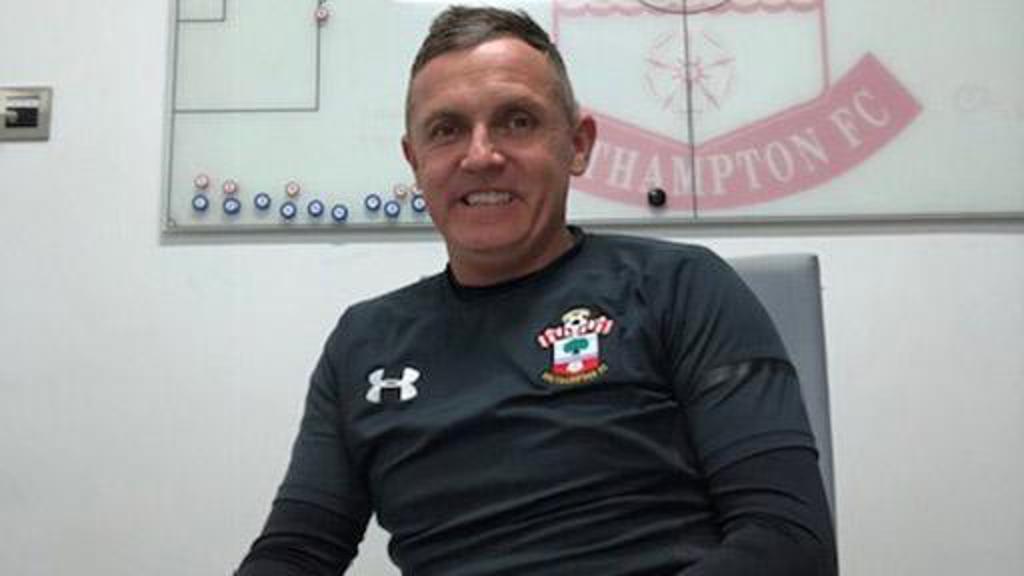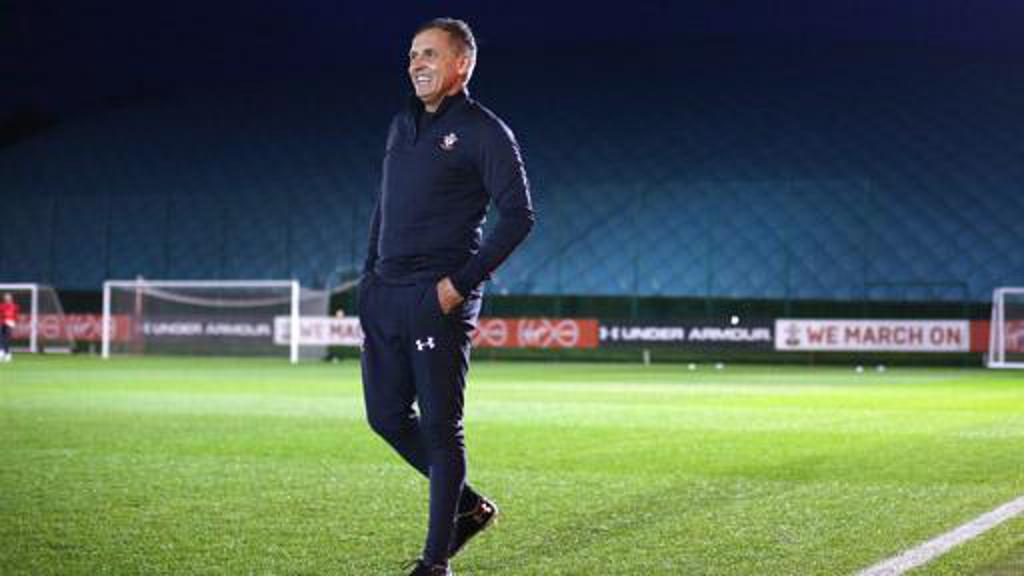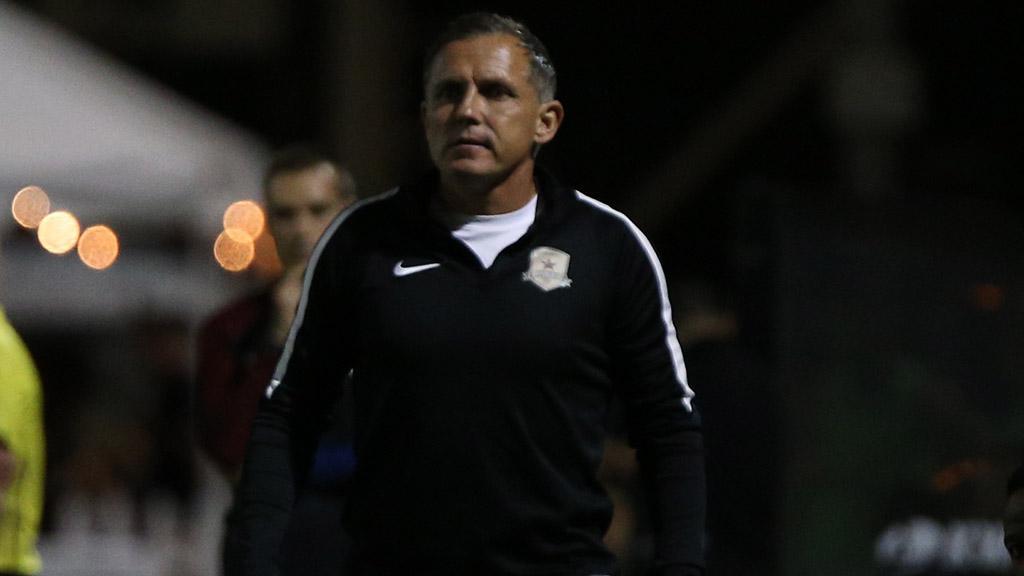
Meet the Bee who is big in El Dorado

Paul Buckle was one of the Brentford squad that won promotion 30 years ago. Now he lives in California, runs a successful soccer consultancy business and is married to a sports TV star. 

For those who were there it is still a special memory: ‘I was at Peterborough away 2 May 1992’. The Bees went into that game not sure of promotion to Division Two (what’s now called the Championship) but a one-nil victory meant they came out as Champions of Division Three.They couldn’t take the trophy home, it was sitting at the game where Birmingham were expected to win. There’s a link to a great video report on this webpage

Everyone, players and fans alike, went back to Griffin Park for a celebration and ‘We are the Champions’ was played on the loudspeakers. There was even an open-top bus parade around Brentford and Hounslow.

Thirty years on the members of that squad are still in touch but they’ve never got together for a reunion. Amongst the farthest flung is Paul Buckle, one of no fewer than seven members of the squad who had joined the Club at Youth Team level. 

Today Paul lives in El Dorado Hills in California, is a leading soccer consultant and is married to Rebecca Lowe, a star of American sports TV. He says that when those players look back ‘we all agree it was the best two years of our lives. It was a great success that eight of us made the first team.”  

One of them was Marcus Gayle who is still in touch with Paul: ‘Title winners at 21 was fantastic with him. I first met Paul as he joined our Brentford youth team back in 1987. We forged a strong bond on and off the pitch at 16 that is still present today. 

“Paul was the second one (Matthew Howard was the first) out from the youth team aged 17 to make his league debut versus York City. I was so proud, nervous and excited that there were two players from our youth team out there’.

Paul remembers the moment he was told about his debut: ‘it was the Friday before the last game of the season, I was doing my duties, cleaning my boots or something, when the youth coach Colin Lee walked in and said ‘get your stuff and get yourself home’.He said the same to Matt Howard.’You’re in the first team squad tomorrow’. 

“We were on our way out and we could see all the other apprentices were gutted: ‘where are you going?’ they asked. ‘Bye lads’, we said, ‘we’re going home’. Competition for places was everything. It was a case of working together on a Saturday but during the week you were in massive competition”. 

Marcus says: “Paul was a great guy to have around at training and matches, He would give me a look before games to say “You on it ? “, because he was on it and ready. Very reassuring to play alongside’. 

Paul says “My years at Brentford were all about winning, we had an incredible youth team, the reserves won and the first team won, it was just a winning culture. Steve Perryman approached me to join when I was let go by Watford, he got me digs with his parents in Greenford, he picked me up to take me to training, that’s how committed those guys were”.

Brentford historian Greville Waterman says; “Paul Buckle was one of many who came through the all-conquering Brentford youth team of 1988/89 and looked to be quite a prospect when he broke into the Brentford team. 

“A small, agile, quick, hard-working midfielder who was good on the ball and never stopped running, he never quite fulfilled his promise or established himself in the team, despite playing 35 times in 1990/91 and winning a Division Three Championship medal in 1992.

“The Bees preferred brawn to brain in midfield and, like so many others, Buckle fell out of contention under David Webb and was allowed to drift away.

“Brentford’s loss was Torquay, Exeter and Colchester’s gain as he became a key and dominant player at each club, winning promotion at Colchester and played nearly 350 Football League games in an excellent career before becoming a manager who gained varying levels of success at Torquay, Bristol Rovers, Luton Town and Cheltenham’. 
Returning Torquay to the Football League as manager of the winning team in the 2009 Conference play-off final

In 2013 Paul made a dramatic lifestyle decision, he left Luton Town to live in America. His wife Rebecca Lowe, a former BBC  sports presenter, had been hired as the lead studio host to anchor NBC’s coverage of the Premier League in the USA working from a studio complex in Connecticut. Paul was initially working with a football academy in nearby New York.

“In 2015 I got a break to go and became the Head Coach of Sacramento Republic in Northern California. We won the title in my second season. But Rebecca’s job was still on the other side of America. They planned on a family so came up with a strategy that has worked well for them.

“We moved here to California. Rebecca flies to the East Coast on the Friday to work for the weekend on the TV programmes, then comes back on the Sunday, then has the whole week at home in lovely weather now bringing up our little boy Teddy. We’ve been able to stay in one place because I’ve become a consultant working from home. I don’t travel too much but I’m involved in a lot of different clubs. Before that I’d moved around so many times”.In fact Paul made one more move back to the UK but it was a short-term one. For six months in 2019 he looked after the Under 23s at Southampton. “There I really got to understand how big clubs run and are successful.” 
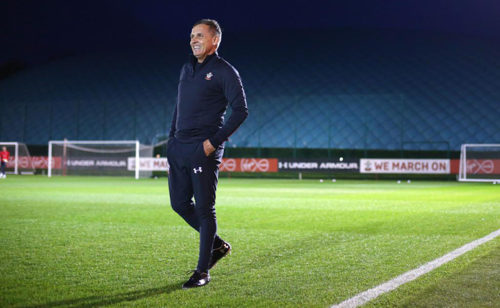
On his return to California Paul decided to switch from coaching to consultancy. He is now a Technical Advisor to owners of teams in the two biggest leagues: Major League Soccer (MLS) and United Soccer League `USL`.“Its mostly guiding, supporting owners to make decisions and best practice within each club. Its not rocket science, you need people who are experts in their fields, and you need to work together with a common goal”.

Rebecca’s career is going well too. NBC recently struck a six-year US broadcast rights deal with the Premier League worth over two billion dollars. NBC have chosen her to be a presenter on their Olympics coverage for every games since 2014.

“Rebecca has done extremely well . She is the face of the Premier League in America and gets recognised by people.  She is the hardest working person that I know in terms of her commitment, drive and dedication.
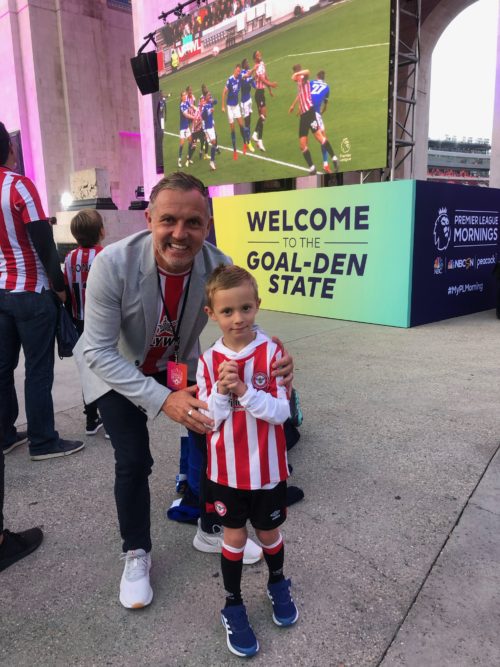
Paul with son Teddy in Brentford kit at a Premier League fan day in Los Angeles. Bees v Leicester is on the big screen.

“We love living here. If you had told me what my professional and personal journey would turn to be I would have said ‘no chance’.”

You can view the article here: https://www.beesunited.org.uk/in-focus/meet-the-bee-who-is-big-in-el-dorado/
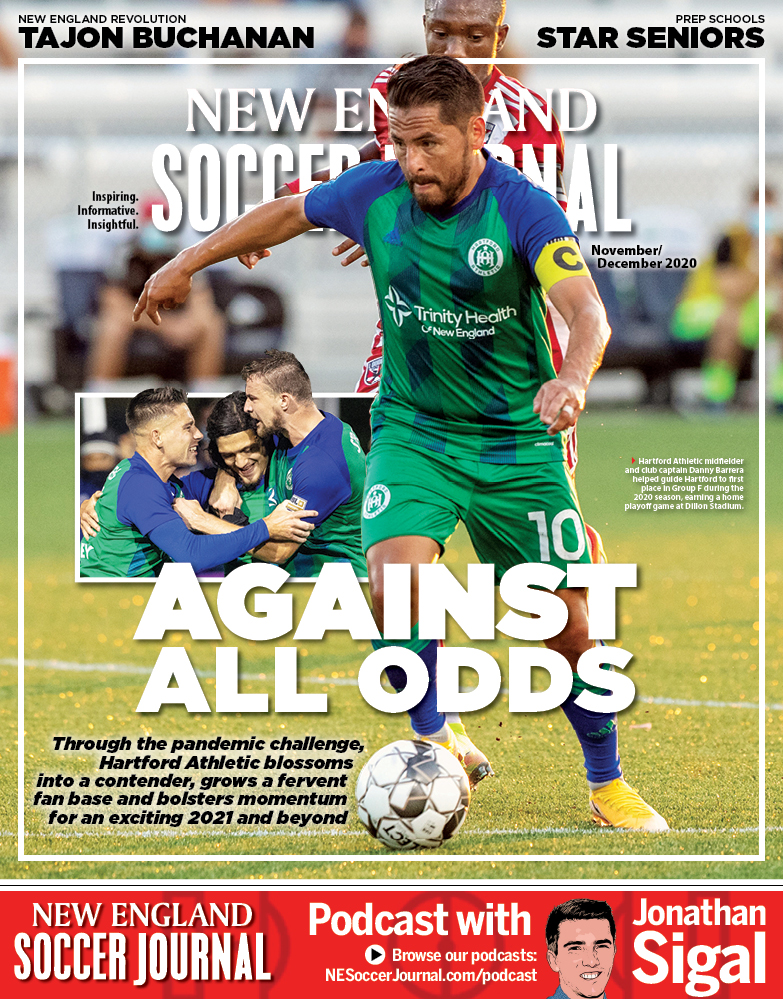
Hartford Athletic planning for life after Radhi Jaidi, fielding global interest

Radhi Jaidi, as Hartford Athletic head coach during the 2020 USL Championship season, guided the second-year club to its first playoff berth.

But now the Tunisian manager’s future could lie elsewhere, according to club chairman Bruce Mandell, as his one-year secondment comes to a close.

Mandell said this was the goal all along, though, when Jaidi arrived after leading Southampton’s U-23 team. Hartford has a partnership with the Premier League side, which also led to left winger Tyreke Johnson spending this past season on loan.

“He’s now free to pursue other avenues,” Mandell told New England Soccer Journal. “We’re free to continue talks with him, too. I think we’re certainly making plans and that coach Jaidi may not be here next year, which I think would be a great thing.”

Hartford went 11-3-2 during the adjusted 2020 season, beating the Pittsburgh Riverhounds by one point to top Group F. That earned Hartford a home playoff game, which they lost 1-0 on a 93rd-minute strike against Saint Louis FC.

Jaidi helped a relatively-young team – though it should be noted that leaders like midfielder Danny Barrera (30) and forward Alex Dixon (30) played key roles – navigate the season amid the COVID-19 pandemic. Playing a regionalized schedule against mostly MLS reserve sides like New York Red Bulls II and Philadelphia Union II, they grew into the club’s 3-5-2 formation and finished with a joint second-highest 2.19 points per game.

It all leaves Jaidi receiving a massive endorsement from Mandell, especially after Hartford went a meager 8-21-5 in 2019 as an expansion club.

“We’d be very fortunate if [Jaidi returns], but on the other hand that wasn’t the aim here,” Mandell said. “The goal was for us to establish ourselves, which we did, to make the playoffs, which we did, and for coach to get the experience. He will be a Premier League manager one day. That probably won’t be his next step, but I’m looking forward to him growing.”

So where does Hartford go from here? Mandell said he’s already fielding calls from across Europe and the United States – “trust me, the phones are ringing off the hook,” he said – with interest growing after 2020’s marked improvement.

Technical advisor Paul Buckle will play a significant role in the next hire, as he did with Jaidi’s appointment. There’s even the possibility for an arrangement with other European clubs (ala Southampton) after they saw Jaidi prove himself.

“Other top-level European clubs are reaching out to potentially do a similar deal like we did with coach Jaidi,” Mandell said. “It’d be taking one of their top coaches and really provide them with an opportunity to coach a professional team. So there’s a model there. We’re not locked into it. The three interviews I have today are American coaches who are interested. We’re open-minded.”

As for timing, Mandell said they’re not cornered into a certain date. But the USL Championship is planning a 34-game season that “could be starting” May 1, so they technically don’t need a head coach until mid-February or March. The patience also comes from how Hartford’s head coach doesn’t pick the players, so they’re given a template rather than hand-selecting additions.

“We’re not looking for the unicorn manager,” Mandell said. “I don’t think that’s the right way to go. I think you build the club and you build the structure and have the infrastructure, then you provide managers an opportunity to come in and prove themselves tactically, picking who to slot in and you go. It’s not common, but we’re looking at this as being club-first and then the manager comes in as a member of the club and supports the vision.”

Given that timeline, don’t expect Hartford to rush into what’s potentially its third head coach in as many years after 2019 was spent with Jimmy Nielsen at the helm. They believe they have a template and proven model, so they’re making plans for a new face.

“That was the goal all along, that was the absolute goal,” Mandell said of Jaidi. “It was for him to come over, provide us with the professionalism that I saw and that Paul Buckle really believed we could bring to Hartford and give us that base, that foundation. He did it and was successful.”

USL Championship: Hartford Athletic’s turnaround

The surprise of the 2020 USL Championship season since its restart is Hartford Athletic, which improved to 4-1-0 with a 4-1 win over Loudoun United on Sunday.

Two goals from Ever Guzman in the first 18 minutes gave Hartford an insurmountable lead. Danny Barrera added a goal and assists on both Guzman goals.  Alfonso Vazquez, an 18-year-old product of nearby Wethersfield High School, completed the scoring.

Barrera is one of only four starters against Loudoun United who were with Hartford in 2019 when it had an 8-21-5 record to finish with the third worst record in the 36-team USL Championship.

Hartford Athletic’s head coach is former Tunisian international Radhi Jaidi, who took over last November.

Hartford XI vs. Loudoun United
PLAYER (2019 TEAM)
Parfait Mandanda (Sporting Charleroi/BEL, loan)
Kevin Politz (Greenville Triumph)
Matheus Silva (Orlando City B)
Alex Lara (CSUN)
Gabriel Torres (Chattanooga FC)
Conor McGlynn (Siena College)
Mads Jorgensen (Hartford Athletic)
Harry Swartz (Hartford Athletic)
Danny Barrera (Hartford Athletic)
Ever Guzman (San Antonio FC)
Alex Dixon (Hartford Athletic)

Hartford’s only defeat was a 4-1 loss at Indy Eleven, which leads the overall USL Championship standings with 15 points. Hartford is second with 12 points and two games in hand.

By Paul Kennedy via https://www.socceramerica.com/publications/article/86356/usl-championship-hartford-athletics-turnaround-c.html?verified=1

Buckle Joins Hartford As Technical Advisor

Hartford Athletic announced on Friday that Paul Buckle would join the club as Technical Advisor to Chairman & CEO Bruce Mandell. 

Buckle comes to Hartford by way of Southampton FC of the Premier League. Prior to Southampton FC, Buckle served as Head Coach & Technical Director of Sacramento Republic FC for three seasons, where he led the club to the USL Cup Playoffs each year and finished first in the Western Conference in his first full season at the helm in 2016. In his role in Hartford, Buckle will focus on soccer-related matters in partnership with the Front Office and coaching staff. 

“We are thrilled to have Paul join Hartford Athletic,” said Mandell. “Hartford Athletic is committed to excellence on and off the field, and Paul provides another resource for our Front Office and coaching staff as we continue to develop as an organization.” 

“Paul has great experience in the USL and in England, and I am excited to work together as we continue to build our club,” said Hartford Athletic Head Coach Jimmy Nielsen. “We had several battles over the years coaching against each other in the USL, and I look forward to now teaming up to deliver a top-class club in Hartford.” 

“It is easy to see why Hartford is such a special city and such a special opportunity,” said Buckle. “With a great new stadium about to come to life, a talented staff, and an avid supporter’s culture that continues to grow by the match, Hartford Athletic is poised to become one of the top organizations in the USL Championship. I cannot wait to work with Bruce, Jimmy, and the whole team to help continue to build a club that competes at the highest level and makes the fans proud.” 

Hailing from England, Buckle made more than 500 appearances over the course of his professional playing career. Following his playing career, Buckle managed four English Football League clubs before making the move to Sacramento Republic FC as Head Coach & Technical Director of the USL Championship side for three seasons. Most recently, Buckle served as coach for the Southampton FC U23s. He holds the UEFA Pro Coaching License and U.S. Soccer Federation Pro Coaching License. 

By USLChampionship.com Staff via https://www.uslchampionship.com/news_article/show/1021974%20-%20May%202019

The USL Q&A – Paul Buckle

Having led Sacramento Republic FC to three consecutive berths in the USL Cup Playoffs, including finishing first in the Western Conference in the 2016 season regular season, one of the surprises of the 2018 USL Championship campaign arrived just over a month before the season began.

Last February 1, Republic FC announced that Technical Director and Head Coach Paul Buckle had departed the club and Simon Elliott had been appointed as the third Head Coach in Sacramento’s history.

A little more than a year on, Buckle is now an assistant coach for Premier League side Southampton FC’s U-23 side that competes in the Premier League 2.

We caught up recently with Buckle for a conversation about the experience of learning in his new surroundings, what he enjoyed most about his time at Republic FC and whether he’d be open to a return to coaching in the United States in the future.

ON LIFE AT SOUTHAMPTON FC

USL: Joining the coaching staff at Southampton, what’s been the most eye-opening thing for you about how they go about their day-to-day business?

Paul Buckle: I think the most eye-opening thing is how many people work at the club and how well organized it is. We probably have something like over 400 people that work at Southampton Football Club. The second thing is how well organized it is and the relationships between everybody from the First Team level all the way down to the Academy and the club. There are so many different roles at a Premier League club, and I think Southampton is an amazing club because everybody knows each other. So, that’s the first thing that’s been absolutely eye-opening.

USL: The reputation the club has is one that does a lot of in-depth work with data analysis and player analysis. Does that speak to the technology that’s available to you guys on an individual one-to-one level to get the most out of the players at your disposal?

PB: 100 percent, we don’t leave any stones unturned. Everyday, we meet every morning, there’s discussions, there’s meetings, there are so many moving parts because obviously with the U-23s we are side-by-side with the First Team. Our offices are right next door, it changes for us all the time in terms of players going across to the First Team and training with the First Team and fulfilling the First Team’s needs – we are there to support that – and obviously once we are set and we’ve got our numbers we will have some of the U-18 boys up training with us, and of course 16s will train with the 18s and it’s a real knock-on effect we work very closely together. 

As part of Southampton FC’s coaching staff, Buckle is part of one of the most forward-thinking groups in the Premier League when it comes to analytics and performance. 

Also, the sessions are well planned out, we have a fantastic curriculum. You would’ve heard the Southampton way, it’s very true, we stick to it. Our principles and our values are very much aligned there in the club. Certainly, it’s changed the way I think and go about things in my career. That’s been fantastic, and not only for the players to develop, but also as a coach to develop because you get to see your sessions straight after you finish training, you go up to the office onto the laptop and your session is there to look at. Your session is there, the 18s session is there, the First Team session is there to look at so you can self-evaluate. You’re not only evaluating the players all the time, but you can evaluate yourself. That’s a brilliant, brilliant resource.

USL: You’re working with the U-23s, you’re in contention for promotion from the PL2 Division 2 up to Division 1, it looks like you’ve got a good fight going on with Wolves at the top of the standings right now, what’s it been like to oversee those teams, not just try to push those players on to the next level, push them onto the First Team, but have success on the field as your own group?

PB: I think that to understand the model at the 23s level, it’s not about winning. Now of course, we want to win, when you win games, at times you can look at it and those games and say we’ve won because we did A, B, and C right. But the objective, the clear objective, is to get the players into the First Team and ultimately stay there. As an example, we played Villareal B, in the Quarterfinal of the Premier League International Cup and we’ve won that 2-1. The next game against Wolves away, we had six changes for the team. That doesn’t happen where you are in an environment where you are going to try to win. No teams are making six changes in a week. We are because players are going up, big success in [the Villarreal] game, players did well, they go to the First Team, we have the younger players come up.

We sometimes have some of the First Team players come down, players that need to play minutes that have not played for a while. You can’t get any continuity in terms of the same team every week, it changes every single game and rightly so and for us, that’s success. The one thing that doesn’t change is the way we go about things, the message to the players, the system of play – obviously we follow what the gaffer is doing in the First Team, we play 3-4-3, we high press – so all those things don’t change. But ultimately, we are doing very well to be where we are, considering we have so many that go up to the First Team, we are delighted to be up there challenging, we are delighted to be in the Semifinal of the Premier League International Cup, but ultimately the goal is getting players through to the First Team.

While winning isn’t the primary focus for Southampton FC U-23s in the Premier League 2, the side has found itself near the top of its division this season. 

USL: You mentioned earlier about analyzing yourself and going back over the sessions that you’re running. As someone who values personal development in the way that you do, what has it meant to learn from the technical staff at the top of Southampton’s organization?

PB: It’s meant everything to me. The fact that I’ve come back to the U.K. to take the job in the Premier League, when I was asked the question about coming here straight away, I thought straight away can I do it? Am I ready to do it? And obviously I thought I was. The second part of it was the learning part, because I’ve always wanted to push myself to be better. I’ve wanted to work at the top levels. 

When I’ve come to the United States, I sort of started again. That’s no disrespect to Met Oval, but I went to Met Oval and I learned, I learned about America, the culture, the system and had 18 great months there. Then Sacramento was my first challenge as a Manager and Technical Director of a brilliant USL club, and I am very proud of the three seasons there. Taking the American Pro license there I’m nudging again towards on how to improve. Didn’t need to do it but wanted to do it.

This was the next step for me; the next part was trying to improve on that, and I think this is a step up again because coming in and seeing how a manager does things at a Premier League-level, there to watch all of the home games in the Premier League, watching Tottenham come, watching us come from behind against Spurs, playing against Manchester United in the 23s, playing against Wolves, playing against Villarreal, playing against Fulham, these are all new challenges for me, and it’s are a great learning environment for me. So, when I come back to the States, I am going to be a better coach. I think that’s what I’ve always tried to be.

ON HIS TIME WITH SACRAMENTO REPUBLIC FC

USL: What did you take away from your time with Republic FC?

PB: Too many things to probably explain in this interview. Fantastic, absolutely top-class experience, because Sacramento Republic is a first-class organization, that’s for sure. You know understanding the culture, trying to continue the success of the club which I’m pleased to say we played a part in that in terms of the Western Conference. But for me mainly it was the first time working outside of the U.K., I think that takes you massively outside of your comfort zone, to try and implement your thoughts, your beliefs you know especially on development. Working with the academy, working with the First Team, bringing that together was very, very new for me. But the biggest thing I suppose was the different nationalities, the different cultures, working with Serbian lads, the Colombian lads, Mexicans, Americans, English, Irish, you know that’s pretty rare, so that was fantastic. The people of Sacramento, and the staff, was an amazing experience for me.

USL: Despite not being with the club last season was it still gratifying to see the team have another successful year, and guys like Roberto Hategan, Quincy Butler now start to emerge from the Academy and vie for First Team minutes?

PB: Absolutely amazing, because you know it’s no secret, I stayed at Sacramento right through the process of recruitment, so I was a part of that recruitment process. I worked hard looking at the players and bringing the right players in, and I think that was proven. The guys that are in charge now have done an amazing job. I think I left the club in good health, in terms of if you look back on it, for me I was always going to stay as Head Coach for around for three seasons, that was always my goal, because I think by then it was healthy to have the change. Healthy for me and healthy for the club and that was what I always set out to do. 

During his time with Republic FC, Paul Buckle led the side to a first-place finish in the Western Conference in 2016. | Photo courtesy Sacramento Republic FC

So, I am very, very pleased that looking back on it, the three years where we won lots of games and had lots of great times, and then to hand it over in a healthy way. To top it off with seeing the Academy do well, because I was Technical Director as well, to see if those players had an opportunity to come through the ranks – which I always said I would do – it’s brilliant to see now to see that coming to fruition.

USL: How did you spend your time between moving on from Sacramento and being appointed in Southampton?

PB: I chose to take a rest, it’s the first that I’ve had in many, many years, and I would recommend it to coaches, you know. I think you have time to reflect, I did a lot of reflecting, I spent time with my family, I realized the pressure it puts your family under when you are a head coach. We went full on with it, it’s a full-on job and you have to commit to it. So, I spent a lot of my time with my family, I spent a lot of time thinking about the next challenge, because that’s who I am, you know what do I want next? What does it look like? Yeah, I really enjoyed that time, but I was certainly ready for the next challenge.

This is the greatest thing about football, I’d never said it would’ve been back to the U.K. but it sort-of just fit perfectly to come and do this after having a good break.

USL: It sounds like you would like to lead a club again in the United States. Is that correct?

PB: Why not? It’s home. It’s home for us. We always came to California and to America to stay. We didn’t go there thinking this is going to be a short-term project or put some numbers on the years, we came to stay, and we came to be a success. Obviously with Rebecca and her job [Editor’s Note: Buckle is married to NBC Sports host Rebecca Lowe] and the satisfaction she’s getting from that, the challenge for me was come to America and start again. I’ve enjoyed that, that’s been a huge challenge for me, and now I feel more equipped to lead, as a head coach as a technical director, and you know with the growth of the game in America – especially in the USL Championship and League One thanks to the great work Jake Edwards and his team there are doing – it could be a good combination moving forward, so I’m always open. I loved my time with the Republic, and if the right opportunity comes, you know, who knows?

By NICHOLAS MURRAY – nicholas.murray@uslsoccer.com via https://www.uslsoccer.com/news_article/show/1009467

ICS catches up with former Republic FC Manager Paul Buckle

I recently had a chance to catch up with former Sacramento Republic FC Manager Paul Buckle from his office in Southampton, Hampshire, England at the headquarters of Southampton FC of the English Premier League (EPL). 

From our 20 minute conversation, it was clear that Buckle was clearly ecstatic and energized by the opportunity to be coaching the Saints’ U23s. And what’s not to like? He is coaching in the EPL (England’s top-tier football league), which by the way, is considered among the best soccer leagues in the world, but maybe more importantly, he is once again working in the academy where he is responsible for developing and mentoring players. 

Buckle and I discussed how the position came about, how coaching in the academy is different than coaching a first team, the difficulty of being away from his wife Rebecca Lowe and family (where he was incredibly transparent), and I got his thoughts on the Republic’s latest development on its MLS bid. 

So, without any further delay, below is my interview with the Republic’s former gaffer. It’s worth noting that the interview is a tinge long, so grab your favorite beverage and settle in. 

Good to catch up with you coach. Thank you for taking the time. How have you been?

[I have] been really well William. I have always wanted to work at the top level and in a top level environment, and I think anybody in any profession wants to get to the top. I wasn’t expecting this offer, but it was one that I’m so pleased that I took because to work with these types of players [is incredible]. I think we have something like 25 internationals between U16 and U23…so to come work in an environment where resources are incredible, the training ground is incredible, and the people here are immense [is great]. I am delighted and I am thoroughly enjoying it. 

How did this opportunity come about? Can you walk me through it?

[Laughs]…I’m trying to figure that out myself. I think football is a global village. It’s just nice to be able to come back across [to England]. I wasn’t expecting the phone call. I think the job I’ve done developing younger players [played a role]. When I was a head coach in England, I was always taking players out of the Premier League and developing them…you know, taking them on loan. 

Southampton made it clear that they wanted me to come in and work with the U23s, and it’s an age group that I know well. So I think it came from a mixture of work I’ve done in the UK and also coming to America. That improved me as a coach I feel by working in the academy in Brooklyn and then coming to Sacramento for three incredible seasons there. I do think club’s keep an eye on coaches. 

I can share with you now…I’ve had some really, really good offers in the U.S. after leaving the Republic, but none of them were quite right for me. I am reluctant to share names…obviously I don’t think that’s the right thing to do, but I had three or four good offers to work in the U.S. with other clubs.

But in many ways, I was very satisfied with the work I’ve done since coming over from England. But when this opportunity came….to work in the Premier League…it’s something that I’ve always wanted to do. The timing was perfect. 

Like I said, I’m so pleased I accepted it. With any move in football, there is always risk attached to it, but it’s really helped my development as a coach, and I have been able to add value to such a great football club. 

To expand on what you’re saying if I may, did it have to be an opportunity for you in the EPL to get you back coaching in England?

Yeah, that’s a 100 percent right. That’s no disrespect to anyone or any club. This was the only one. We work so closely with the first team. We’re on the same floor, we’re right next door to the [first team] head coach. They take the players from us on a daily basis, which is what we want…which is the biggest part of our roles in U23s….to get players into the first team.

There is a pathway for that at Southampton. There is a history of producing players for the first team and selling them on. I am seeing that first hand how that operates. 

I have always been a believer that you have to get [younger players] around the first team for their development. So we work super close with the first team. We play on Friday nights with the U23s so I get to the opportunity to watch the first team games when they’re home.

It’s just a high-quality learning environment and a great place to work. So yeah, I wouldn’t have taken any other job probably outside this level of football. 

What is the connection for you or satisfaction that comes with developing academy players?

I think hard work is everything. I’ve always stood by that. You also have to have the talent in the first place. But certainly with the players…it doesn’t matter what level you work as a coach, you’re looking to maximize the potential of the player. There is an enjoyment when you see a player finally click. You start to see them grow up.

It’s a tough challenge in England. We ask the players to between 18 and 23….there’s decisions made on their futures. So it’s a fast-tracking mechanism in many ways, where you need a club like Southampton that is going to show a clear path for the players. 

On a daily basis, we wait for our numbers of who we got. Sometimes we get first team players come back and train with us for whatever reason. But when players go, the other lads that see that player even go and train with the first team is a big deal. That’s a massive incentive, which I think as a coach, you need to have or sometimes things that that you say may fall on deaf ears. 

So we’re very lucky that we work in a environment where there is pressure on us to get those players ready to go into a first team environment. So yeah, I am a massive advocate for it. At every club I’ve been at, I’ve always tried to get the young players involved and through, so this suits me nicely. 

You touched on it, but how is coaching in the academy different than coaching the first team? Obviously you still want to win, but the mentality on how you approach it is different.

Well, yeah. We beat Manchester United U23s 1-0 away from home, which is great for the players, but then the next game, we had three players go up to the first team, so your eyes can’t be on wins. It can’t. [But] you’re never going to say to the player that we don’t want to win…because of course we do. 

The rewards and challenge for us is to get players to the first team and that’s what we will be judged by. Because what’s the point of having an academy system if none of your players come through to the first team? 

I think the one plus for me when Southampton appointed me was I’ve got a record of bringing players through, but I’ve also been a manager, so I know what the head coach is looking for. I’m not going to get disappointed when he takes players from us, because I know it’s development. It’s definitely not about winning. 

But not only [getting them ready for] the first team, players will leave us and go to league clubs…you know, the period in England…they’ll go to the Championship or go to League 1 or League 2. We lose players on international duty…it’s a totally different animal. 

But it’s an absolute pleasure to be working here. 

How difficult is it being away from Rebecca, Ted and the rest of your family?

It’s very difficult. When you’ve been in the professions that we’ve been in as long as we have, you sort of get used to making sacrifices William. You don’t expect everyone to understand that, but it’s something that we understand with each other. 

When the news came for Rebecca to join NBC and come to America, there were huge sacrifices that were made. But we are very much together…making sure we do the right things [for] our family, but also our careers.

Thank goodness for FaceTime, because you do feel like you’re there when you see each other every day. But also, Rebecca’s mom has come out for three months, which is a huge plus. It’s not just to make it easier on us, but to see Ted. 

There’s a lot going on, but we make it work. I am looking forward to coming back in May and we’ll re-asses everything then. 

Have you been following the latest development out of Sacramento with their MLS bid? 

Oh yes. I have everything crossed [laughs]. Rebecca bumped into Kevin the other day, and as you know, he has worked extremely hard with everyone at the Republic. There is no one who deserves it more than Sacramento Republic. It’s been such positive news, [especially] after not hearing anything for quite a while.

That was positive news with Kevin bringing someone on board who can help our push. Long may that trend continue because we deserve it. 

We need to keep doing as well as we can in the USL again this season. They’ve found some good players again and keep pushing right? That’s the key…keep pushing.

As we said at the start of this conversation, the harder you work, the luckier you get, and nobody has worked harder than Sacramento. That’s everyone..staff, fans and players to give us a chance of getting there.

Via: https://www.indomitablecitysoccer.com/2019/2/14/18224477/ics-catches-up-with-former-republic-fc-manager-paul-buckle

Q & A: Former Sacramento Republic FC coach Paul Buckle

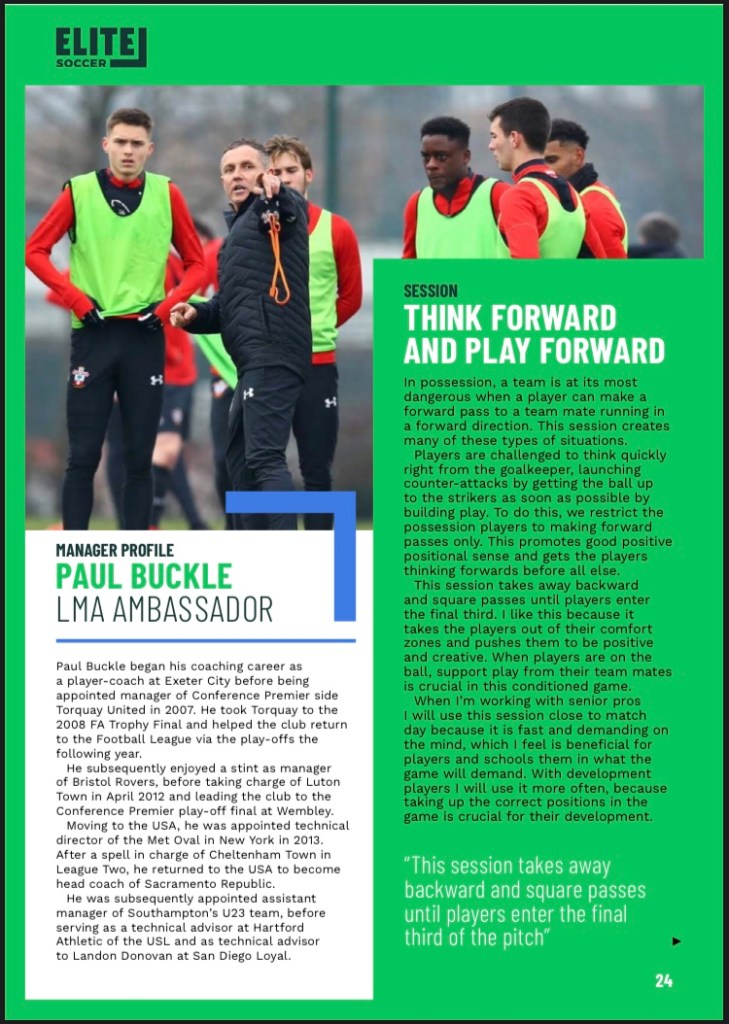
For this edition, we spoke to former Sacramento Republic FC head coach and academy director Paul Buckle. After making his professional debut at age 16 for Brentford Football Club in England, Buckle went on to appear in over 500 league games for 11 different clubs. Following his playing career, Buckle managed teams in England for a decade before moving to the United States to work in the youth game. Since his time at the Republic, Buckle has stayed working in the area, save for a stint in Southampton’s youth academy. 

NorCal: You’ve been around the youth game both in the United States and Europe, what are the differences between here and there?

Buckle: One of the reasons I went to Southampton was just to keep up to speed. There are a lot of different opinions on how to develop players. Clubs have all sorts of different resources, so if you go to Southampton, they have incredible resources, not only for the players, but for the coaches in terms of educating the coaches and making it very deliberate in your approach. Everything that you do with the players, you’re fully cognisant of what you’re doing. It’s all very deliberate, that’s the big word there. I think that clubs have to adapt. If you’re someone like the Republic, what you can and can’t do is going to be different than Southampton. You make the best of what you’ve got. From working in Europe at somewhere like Exeter City in League Two, they don’t have anywhere near the resources of the Premier League, but there’s a clear path for the players to get into the first team if they’re good enough, whereas sometimes in the Premier League level, even if the players are good enough, they don’t get an opportunity just because of all of the players there that can be a bit of a roadblock. The biggest thing that I learned at Southampton was communication and having a clear way of working with all of the staff. I think that’s why they’ve had major success with players that they’ve brought through the academy and also players that they’ve paid for and developed. I think that’s the biggest thing there, that everyone is working towards the same mission.

NorCal: You came over to the United States in 2013. Just in that timeframe, have you seen the youth game grow in the country?

Buckle: I’ve seen the game grow, that’s for sure. I’ve been married to Rebecca (Lowe) so I’ve seen the growth of the Premier League here, but I’ve also spent two years at (New York’s Metropolitan Oval) and when I got there, they were really struggling. We not only turned that around, but we actually affiliated with New York City FC and had all the guys from Manchester City come over. They set the standards for us. So I saw a big change just in those two years in the way that professional clubs were affiliated with youth clubs like Met Oval, who were really developing kids brilliantly with limited resources. Then going back to the pro game with Sacramento, you saw the talent there, you saw the hard work the coaches did with those players in the academy. My job there was to create a pathway for the players into the first team. That’s the crucial part for the players, the pathway. Of course you need coaches to be open, you need coaches to keep wanting to learn, but the players need somewhere to keep developing year after year, especially as they get to 16, 17, 18. I know here the collegiate game is here for them, but I always wanted to give them that experience in and around the first team because that’s where they really grow.

NorCal: So is the next step then bridging that gap for that age group to get into the first team rather than maybe going to college and only getting to play in a two month season?

Buckle: I think certainly getting them in training around the pros is crucial. Because at 16, 17, 18, I’m not going to say that you’ve learned the game, but you’re well on your way. You’ve gone through all the basics, you’re now on the tactical side. Once you get the players up to the speed of play around the pros, the pros are professionals for a reason — they’ve done a lot of things right to make it there so they’re great educators for the young player. In terms of speed of play, the player that’s dominated youth football comes to the final hurdle. You’re up against men, the expectation is greater, the demands are greater, and they’re around a head coach that needs to trust them. I think development is great, of course they need development, but they need the realization at the end which is, if you want to be a professional footballer, then you need to win games. There’s a lot more too in the final chapter because you want to take all the good things they’ve done in the academy, but they also need to learn to win as well. I think that the USL is a great place for young players to develop. Take a look at Orange County SC, they’re a great example of a USL club that is bringing youth players through into men’s football right away. They’ve affiliated with Rangers so I think that type of pathway is a great pathway for a young player.

NorCal: How important was it for your career to have a clear pathway to the point where you made your first team debut at 16?

Buckle: It was huge because you need someone to give you an opportunity, you have to have an opportunity. You sink or swim. I played and then didn’t play again for 18 months so that was a challenge mentally for me, to go back to the reserve team and fight my way up. I need to get stronger. It showed me a lot of things. Getting into the first team gave me a real taste for it, but it showed me how far off I was. I needed to bridge the gap physically. I needed to mature. I needed to really speed my game up because the pro game was a lot different. I did that but I certainly had a club at Brentford that really wanted the young players in the team. I think we have to have that in whichever country we’re in, we have to have the mentality that if we’re going to have academies, we need people running them who understand how to get players into the first team.

NorCal: Right now, everyone is dealing with an unprecedented situation in COVID-19, which means that no one can train. What advice do you have for youth players right now?

Buckle: To be a professional athlete you need a bit of motivation. Every coach wants and demands ownership from the young players. This is a great opportunity and test. When I was at the Republic, if you told some of the young players to be first in and last out, it was a test for them because that’s something they have to do on their own. I would always say, “don’t wait to be trained. Of course there’s a session going on today, but you need to be doing other things yourself to get that edge and to make it and to stay there.” This is going to be a time where players are going to be tested. Can they get up in the morning and follow guidelines on their own? Can they spend time on their own and work? There’s a great satisfaction that comes out of that and that’s what’s needed. Look at Cristiano Ronaldo. We have an opportunity in this day and age to go online and see what he’s doing and he’s going way above and beyond all the other players. You’ve got to find motivation in this time. Once everybody gets back to playing, you probably will be able to see who has been putting in the time and who hasn’t.

NorCal: Anything else you’d like to add about youth development in this country?

Buckle: Just that with all the great development that’s going on in NorCal and across the country and in all of these academies, professional clubs owe it to them to create a clear pathway for the young players to come into the first team.

Via: https://norcalpremier.com/q-a-former-sacramento-republic-fc-coach-paul-buckle/

LMA: TRANSATLANTIC TRIUMPH

Paul Buckle had a decade of experience of UK club management under his belt before he made the move to Sacramento and had to ‘start all over again’. It was, he says, the best decision he ever made.

You had a successful career in English football before moving to the US, initially with no job in place. Why did you feel that was the right thing to do?

I was manager of Luton Town at the time and was proud of what I’d achieved there, in particular having led them to the play-offs and achieving a win against Norwich City in the FA Cup. But when, in 2013, my wife was offered a job at NBC I chose to move to the US with her. It was a massive decision for me, but I felt that having enjoyed a long career as a player and then as a coach in England I’d made a good go of it there, so why not?

I didn’t know very much about US football at the time, but the LMA was a great help, providing me with support in making my decision and reassuring me that football was really growing in stature in the US. So I decided to go for it and moved to Connecticut.

Your first job in the States was that of technical director at the Metropolitan Oval. How useful was that in preparing you for US club management?

The Met Oval is an academy in New York and provided a great opportunity for me to travel around this huge country and get a feel for how the industry operates here. I learned, for example, how the college and youth development systems work in the US, and I went to Florida to coach at the ‘combines’, which I’d never heard of before. Combines are trials for college students who want to become professional players; they are players’ first real opportunities to showcase what they can do in front of professional coaches and managers.

To outsiders the US college system can seem very complicated, but it is brilliant. For four years kids get their college education, which I believe is very important, and when they come out at 21 they can go into the professional game. They enter what is known as the draft system, a complex process whereby clubs take turns to pick who they consider to be the best college players for their teams.

It would be easy for an experienced English coach to think that they can just step into a new role abroad, but that isn’t the case. I found it tough at first, as I had to learn all of the systems and processes from scratch, but I think that starting from the ground up is usually the best approach.

When I wanted to become a coach in England, for example, I didn’t just walk straight from being a player into a manager or assistant manager role; I went to work at an academy because I thought that was the best way to learn the ropes.

So my time at Met Oval was a really good grounding and meant I felt ready when the opportunity to manage presented itself.

That opportunity came at Sacramento Republic, where you’ve been since July 2015. How have you found the experience so far?

First I actually returned to the UK to take the manager’s job at Cheltenham, because having worked in English football since the age of 16 I was missing it. It didn’t work out, but I think it was important for me to give it another shot in the UK to get the idea out of my system.

I knew then, with confidence, that moving to the US really was the right thing for me to do. I came back to the US to take the job of head coach and technical director at Sacramento having spent quite a bit of time at the club and built a rapport there.

I’m now totally settled and feel that this club is a great fit for me. Sacramento Republic is only two years old and we’re building it up, with a new stadium and development of the academy in particular. In my early career I helped to build Torquay United over four years when it dropped out of the Football League and managed to get it back there again, so that growth element is something I’m familiar with and that excites me. The facilities here are great and the people have treated me very well.

How does working at a US club compare to what you were used to in England?

In some ways things aren’t so different. The football is the same – the same pitch, the same number of players, the same problems – and I work with players from many nations, including Serbia, Ireland and Columbia. Other things about working in the US are very different, and not only the climate, which offers so many possibilities and a very different lifestyle. I don’t think managers are under as much scrutiny in the US as they are in the UK. You only have to look at the statistics on dismissals to see that being a head coach or manager in England is a cut-throat business. But having worked in that environment I’m now instilled with the need to work hard and prove myself in the role. I’m proud of my record to date and I know that to maintain that and build on it will require hard work and dedication. When I joined Sacramento we had about 10 games left in the season and were just outside the play-off positions, so my immediate priority was to ensure we made the cut, which we did. Since then we’ve moved some players on and recruited new team members, which was a useful learning experience for me.

As a manager in England I used the loan system a great deal and built up a good database of players and contacts, but coming to the US I needed some help in getting to know the market. Thankfully I have had fantastic support from my director of football, Graham Smith, an ex-player who has been in the US for over 20 years now. With him I’ve been to Mexico and to the UK to spend time with Liverpool and Southampton, and I’ve really worked to promote our club and to draw on all the contacts I’ve built up over the years.

Moving to another country is never going to be easy, even to somewhere that seems so familiar to many Brits. Just how much of a challenge was it and why was it worth it?

I don’t think I was prepared for the change initially. Having worked for nearly 30 years in English football you think you know the game, the area and the market, but to be dropped down somewhere like Westport Connecticut is quite a shock to the system. You basically have to start all over again.

I went from being manager of Luton Town and playing games to a full house to working at an academy in the middle of nowhere.

But hard work pays off and I worked very hard to start again over here. Above all else, that would be my advice to other coaches looking to work abroad – if you get offered opportunities or are head-hunted for a role that’s great, but you will still have to work hard and do your homework so that you are familiar with the culture, the processes and the systems in place.

English football was great for me, but one thing it taught me is that if you fail in your first job it’s likely you won’t get a second chance to show what you’re capable of. That’s why, from the start, I was determined to ensure I was prepared.

Taking myself out of my comfort zone and gaining this experience abroad has been a massive step forward in my development as a coach and I have no desire to leave in the short term. With Major League Soccer coming to Sacramento there are big challenges ahead, so I’m totally focused on the job in hand.

Via: https://elitesoccercoaching.net/league_managers_association/transatlantic-triumph/